Exposing Counterfeit “Intrinsically Safe” Radios: How Different Are They from Genuine Products?

According to analysis by the Dynercomm Market Intelligence & Research Center, as leading brands gain greater recognition in the intrinsically safe digital two-way radio market, counterfeit and substandard products—including highly imitative and unauthorized products—have also emerged in areas where market supervision may be limited.
Some unauthorized sellers exploit the reputation and market influence of established brands to market products that closely resemble genuine equipment. Such practices not only damage the legitimate interests and reputation of genuine brands, but also disrupt normal market order and undermine the rights and interests of customers purchasing professional intrinsically safe communication equipment.
In many hazardous industrial environments, intrinsically safe two-way radios are an essential operational requirement. Unlike communication equipment specifically designed and certified for hazardous locations, ordinary non-intrinsically safe radios may introduce potential ignition risks associated with electrical sparks, RF-related electrical energy, batteries, and other electrical or thermal sources when used in potentially explosive atmospheres.
The importance of using appropriately certified equipment has also been highlighted by serious industrial safety incidents, including the “1·15” major production safety accident at Haoye Chemical in Panjin, Liaoning, cited in the original material, where energy associated with the operation of a non-intrinsically safe two-way radio was identified as one of the ignition-related factors.
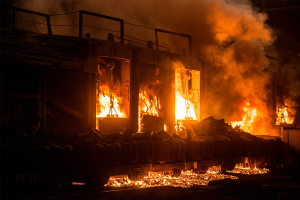
Where equipment performance is directly associated with personnel safety and industrial risk management, verifying the authenticity and compliance of intrinsically safe two-way radios becomes a particularly important and serious consideration. To help professional users better understand these risks, Dynercomm has summarized several typical characteristics of counterfeit and substandard products currently found in the market, highlighting the fundamental importance of selecting genuine, traceable, and appropriately certified intrinsically safe digital two-way radios for safety-critical applications.
What Lies Behind Counterfeit and Unauthorized “Intrinsically Safe” Radios
Poor Resistance to Extreme Temperatures
Counterfeit and substandard “intrinsically safe” radios may exhibit unstable performance under high- or low-temperature conditions. Without appropriate component selection, materials, manufacturing processes, and environmental validation, device functionality may deteriorate or fail when exposed to extreme temperatures.
Inferior Enclosure Materials
Counterfeit products may use lower-grade enclosure materials and less rigorous manufacturing processes, resulting in reduced durability and structural integrity. Higher failure rates under demanding operating conditions can compromise equipment reliability and introduce additional risks in safety-critical environments.
Poor Battery Performance
Counterfeit “intrinsically safe” radios may use lower-quality battery cells and inadequate battery protection circuitry, resulting in limited energy retention, unstable battery performance, and rapid loss of operating time during use. Deficiencies in battery design and component quality may also increase the risk of overheating, leakage, or other abnormalities, creating additional concerns for long-term equipment reliability and safe operation.
Performance Claims That Do Not Match Actual Operation
Some counterfeit products imitate the marketing materials and specifications of genuine intrinsically safe digital radios, while their actual performance may fall significantly short of the advertised claims. Users may experience poor voice quality, signal distortion, excessive background noise, and unstable communications, which can significantly affect communication effectiveness in professional environments.
Failure to Meet Required Technical Standards
Some counterfeit “intrinsically safe” radios may fail to deliver consistent performance across their claimed operating frequency range. Critical components, including RF power devices and other electronic components, may also fail to meet appropriate technical requirements, significantly affecting RF transmission and reception performance.
Higher Operational and Safety Risks
Some counterfeit products may lack adequate electrical and battery protection mechanisms. In severe cases, equipment may experience overheating, battery leakage, charging abnormalities, or other failures. Inferior chargers may also damage batteries and potentially introduce additional electrical or fire-related risks. Such deficiencies can create significant uncertainty when equipment is used in demanding or safety-critical environments.
Shorter Service Life
Due to limitations in component quality, design, and manufacturing consistency, counterfeit “intrinsically safe” radios may experience rapid performance degradation, reduced communication range, poor durability, and shorter service life. Products from untraceable sources may also contain non-standard components or unauthorized modifications, making subsequent maintenance more difficult and potentially increasing long-term repair and ownership costs.
Low-Cost Components and Manufacturing
Counterfeit products are often manufactured with an emphasis on minimizing component costs. Differences may be found in antenna materials, capacitor and resistor tolerances, RF components, switches, knobs, buttons, and other critical parts. Although these differences may not always be immediately visible from the exterior, they can directly affect the radio’s performance consistency, durability, communication reliability, and long-term operating quality.
Why Is It Essential to Choose Genuine Intrinsically Safe Two-Way Radios?
One of the most serious concerns associated with counterfeit or substandard “intrinsically safe” radios is that some may not actually provide genuine intrinsic safety capabilities at all. In certain cases, ordinary non-intrinsically safe radios may simply be presented or marketed as intrinsically safe products, creating significant potential safety risks when used in hazardous industrial environments.
Unlike standard radios, genuine intrinsically safe digital two-way radios are specifically engineered for demanding applications. From materials and internal circuitry to structural design and protective features, they are developed around the requirements of hazardous operating environments, helping control potential ignition risks associated with electrical sparks, electrostatic discharge, and other electrical or thermal sources during operation.
Carefully Engineered with Strictly Selected Components
Genuine intrinsically safe digital two-way radios typically use carefully selected chipsets, antenna materials, enclosure materials, and electronic components to support reliable communication performance. Rigorous material selection and precision manufacturing contribute to a more robust construction, greater durability, and a higher level of product consistency. Before leaving the factory, genuine products generally undergo multiple stringent testing and quality-control procedures, helping ensure high reliability, stable performance, and adaptability to demanding operating environments.
Clear Traceability and Rigorous Safety Standards
Genuine intrinsically safe digital radios provide clear and verifiable product traceability. Authentication labels, serial numbers, and other product information can be used to verify product identity, while a one-device, one-code authentication mechanism provides an additional means of traceability. Products are also distributed through formal channels, giving users clearer access to product information and subsequent service support.
More importantly, genuine intrinsically safe radios are manufactured and tested in accordance with applicable explosion-protection and intrinsic safety requirements. Their intrinsic safety capabilities and interference resistance are designed to address the requirements of hazardous applications such as petroleum and petrochemicals, chemicals, mining, energy, and other high-risk industrial environments, providing a stronger foundation for safe and reliable operations.
Reliable, Durable and Stable Performance
- Performance
Genuine intrinsically safe digital radios generally benefit from greater manufacturing precision and more rigorous production processes. Depending on the specific model, they can achieve high levels of dust and water ingress protection (IP ratings) and undergo stringent environmental and durability testing before leaving the factory. These characteristics help maintain reliable operation in demanding working environments. Professional intrinsically safe radios are also typically designed to withstand a wider range of operating temperatures, supporting stable performance when exposed to significant temperature variations. - Functionality
Depending on the specific model and configuration, genuine intrinsically safe digital radios may provide capabilities beyond basic voice communication, including dust and water protection, ruggedized construction, extended battery life, Wi-Fi, Bluetooth, multi-mode operation, GPS/GNSS positioning, intrinsically safe circuitry, analog/digital compatibility, emergency calling, and voice dispatch functions. These capabilities enable professional radios to address diverse and complex communication requirements across a broad range of industrial applications. - Communication Quality
Genuine intrinsically safe digital radios benefit from carefully selected, high-precision components and coordinated RF and audio design. Receiver performance directly influences effective communication coverage, while the selection and optimization of components such as speakers and audio codecs contribute to clearer and more intelligible voice communications. Through rigorous hardware design and manufacturing control, genuine products can provide more consistent signal transmission and communication quality, helping maintain reliable communications even in demanding environments involving vibration, noise, weak signals, or electromagnetic interference.
Professional Service Response and Reliable After-Sales Support
Genuine intrinsically safe digital radios are typically supported by a systematic and standardized after-sales service framework. From pre-sales consultation and product selection to inspection, maintenance, repair, warranty support, and technical services, formal distribution and service channels provide users with clearer and more reliable support throughout the equipment lifecycle. Defined maintenance periods, professional service procedures, and transparent customer support channels also provide users with greater confidence when equipment requires inspection or repair.
Ultimately, the value of a genuine intrinsically safe digital two-way radio extends far beyond the product itself. Established manufacturers typically combine professional engineering, carefully selected materials, controlled manufacturing processes, applicable market access and certification requirements, rigorous product testing, and comprehensive lifecycle services. By placing user requirements at the center of both product development and service delivery, genuine intrinsically safe radios provide a stronger foundation for product quality, communication reliability, operational safety, and long-term after-sales support.
We aim to provide our customers with…
Comprehensive Professional Communication & Security Solutions
- Comprehensive Project Requirements Assessment
- Practical and Feasible Project Recommendations
- Accurate Solution Quotation
"*" indicates required fields