Analog Meets Digital: The Dual-Track Evolution of Fiber Optic Repeaters

According to analysis by the Dynercomm Market Intelligence & Research Center, fiber optic repeaters play a critical role in extending wireless coverage, strengthening weak signals, and improving communication quality across a wide range of professional applications. As communication technologies continue to evolve, the limitations of conventional analog fiber optic repeater technology have become increasingly apparent. Moving beyond traditional architectures toward digital technology has therefore become an important trend in the development of fiber optic repeater systems.
Analog fiber optic repeaters once occupied a dominant position in the market. In recent years, however, the emergence of advanced digital technologies has created new requirements across the professional wireless communication industry. As users increasingly demand greater coverage flexibility, more precise signal processing, improved network management, and higher system reliability, digital fiber optic repeaters are becoming increasingly important in modern wireless coverage systems. The global digital fiber optic repeater market has also experienced continued development in recent years, reflecting growing demand for digitalized coverage solutions.
Analog vs. Digital: Understanding the Fundamental Differences Between Fiber Optic Repeaters
Analog fiber optic repeaters have traditionally met many basic coverage requirements through their relatively simple networking architecture and lower initial equipment costs. As communication environments become more complex, however, their technical limitations are becoming more significant.
For users evaluating different solutions, understanding the fundamental differences between analog and digital fiber optic repeaters is essential to balancing cost, performance, scalability, and long-term operational requirements.
The key differences can generally be understood across the following areas.
Operating Principle
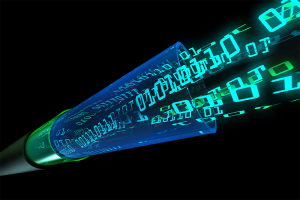
An analog fiber optic repeater converts an RF signal into an optical signal for transmission over fiber. At the remote end, the optical signal is converted back into an RF signal, amplified, and retransmitted.
From a signal-processing perspective, this architecture is relatively straightforward. However, its limited processing capabilities can contribute to challenges such as transmission loss and less flexible network architectures, particularly as coverage requirements become more complex.
A digital fiber optic repeater, by comparison, performs a series of digital processing operations after receiving the RF signal, including signal sampling, quantization, and encoding.
At the base-station side, the processed signal is transmitted over optical fiber to the remote unit. The signal then undergoes further digital processing—including demodulation and decoding, digital filtering, and gain adjustment—before being reconstructed into a high-quality RF signal for transmission.
Through this process, digital fiber optic repeaters can perform more precise signal processing and control, providing a stronger technical foundation for improving overall communication quality.
Gain & Power Control

In long-distance fiber transmission, the technical characteristics of conventional analog fiber optic repeaters may result in variations in RF signal levels, potentially creating uneven signal distribution or insufficient coverage at remote locations.
Digital fiber optic repeaters provide greater flexibility in gain and power management through digital signal processing.
Gain and output parameters can be adjusted more precisely according to application and coverage requirements, enabling more effective resource allocation and helping improve communication efficiency across complex and changing operating environments.
Network Architecture
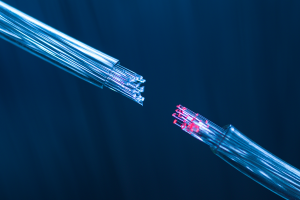
Due to architectural limitations, conventional analog fiber optic repeaters generally support relatively simple networking configurations such as star and daisy-chain topologies.
In a star topology, individual near-end and remote units may require dedicated fiber links. Daisy-chain configurations may rely on optical splitters and can be subject to transmission-distance limitations. As the number of coverage areas increases, additional fiber resources may therefore be required, potentially increasing infrastructure and deployment costs.
Digital fiber optic repeaters provide considerably greater networking flexibility.
In addition to star and daisy-chain architectures, digital systems can support ring, hybrid, and extended network configurations. These options enable more efficient use of fiber resources while improving system scalability and deployment flexibility.
Flexible topology design also allows communication networks to be customized according to the physical layout and coverage requirements of different projects, helping improve overall network reliability and operational stability.
Cost & Maintenance

Although analog fiber optic repeaters typically feature simpler structures and lower initial equipment costs, limitations in long-distance transmission and complex coverage environments may require additional supporting equipment to achieve the desired communication performance.
As a result, lower initial equipment costs do not necessarily translate into lower total system costs. The need for additional infrastructure and more frequent on-site inspection may increase long-term operation and maintenance expenses.
Digital fiber optic repeaters offer advantages in this area through their digital and intelligent management capabilities.
They can support remote monitoring and management, real-time equipment status monitoring, parameter configuration, and fault alarms, reducing dependence on manual on-site inspection and helping lower long-term operation and maintenance costs.
Some digital fiber optic repeater systems also provide comprehensive network management platforms, allowing multiple devices and system parameters to be monitored and managed through a centralized software interface.
Applications & Coverage Environments
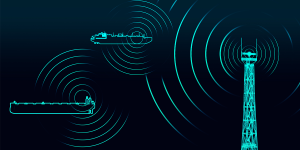
Analog fiber optic repeaters are generally better suited to relatively straightforward applications where coverage requirements, network scale, and operating environments are less complex, such as certain remote areas or smaller industrial facilities.
Digital fiber optic repeaters provide greater adaptability for complex environments and multi-system network applications.
In large, densely occupied environments such as commercial districts and office complexes, as well as industrial areas with complex electromagnetic conditions or multiple communication systems operating simultaneously, digital signal processing and flexible system architectures can provide stronger capabilities for maintaining communication quality under demanding conditions.
Dynercomm Weak-Signal Coverage Solutions for Professional Wireless Communication Systems
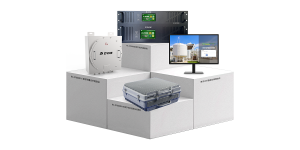
The DYNE RC-OF600D Series Digital Fiber Optic Repeater is an independently developed Dynercomm solution designed to address weak-signal coverage requirements in professional wireless communication systems.
Developed around diverse customer requirements and operating environments, the DYNE digital fiber optic repeater portfolio provides flexible installation and deployment options for different application scenarios.
The RC-OF600DL/Y Digital Fiber Optic Repeater Near-End and Remote Units are designed for deployment across multiple operating environments, while the RC-OF600DY-W Digital Fiber Optic Repeater Remote Unit supports wall-mounted installation for applications requiring greater installation flexibility.
Drawing on extensive experience in explosion-proof industrial applications, Dynercomm has also developed the RC-OF600DY-E Explosion-Proof Digital Fiber Optic Repeater, specifically designed to address the safety and communication requirements of hazardous environments.
The product portfolio covers 150 MHz, 350 MHz, 400 MHz, and 800 MHz frequency bands and features a streamlined architecture and convenient installation.
Without requiring additional base stations, the system can extend wireless communication coverage into areas where building structures or geographical conditions may weaken or block conventional RF signals, including tunnels, basements, remote locations, and communication blind spots.
The DYNE RC-OF600D Series combines flexible networking capabilities with comprehensive network management functions and has obtained China’s Radio Transmission Equipment Type Approval Certificate, with certificate code 25F11W8AJ656.
The complete DYNE digital fiber optic repeater portfolio is supported by a comprehensive network management software system designed to simplify long-term system monitoring and operation.
Through an intuitive management interface, users can remotely monitor and manage repeater equipment, accurately track operating status, flexibly configure system parameters, and receive real-time fault and alarm information.
These capabilities reduce reliance on manual on-site inspection, improve operation and maintenance efficiency, and provide users with greater visibility and control over their communication infrastructure.
By combining digital signal processing, flexible network architecture, remote management, and scenario-based product design, DYNE digital fiber optic repeater solutions provide a comprehensive approach to weak-signal coverage across professional wireless communication environments.
As wireless communication systems continue to evolve, the transition from analog to digital fiber optic repeaters represents more than a change in signal processing technology. It reflects a broader shift toward more flexible, manageable, scalable, and intelligent communication coverage infrastructure—providing a stronger foundation for reliable long-term operation across increasingly complex industrial environments.
We aim to provide our customers with…
Comprehensive Professional Communication & Security Solutions
- Comprehensive Project Requirements Assessment
- Practical and Feasible Project Recommendations
- Accurate Solution Quotation
"*" indicates required fields