Dynercomm Counter-UAS Solutions: Combining Professional Countermeasures with Regulatory Compliance

According to analysis by the Dynercomm Market Intelligence & Research Center, unmanned aerial vehicle (UAV) technology has developed rapidly in recent years and is increasingly reshaping the landscape of public safety and security. As an emerging technology, drones have helped reduce costs and improve operational efficiency across industries such as agriculture, logistics, and energy, while also contributing to applications including emergency and disaster response and environmental management. However, while UAV technologies continue to drive innovation across industries, their increasing accessibility and widespread adoption have also introduced new security challenges. The misuse of drones for unauthorized or illegal activities may pose potential risks to public order, sensitive information, critical infrastructure, and national security.
Rapid Drone Market Expansion Brings Emerging Security Risks
While the development of UAV technology has created significant convenience and new possibilities, it has also introduced increasingly complex challenges for public safety.
Unauthorized drone incursions around sensitive locations such as military bases and energy facilities may create serious security concerns. UAVs equipped with high-definition cameras, infrared imaging capabilities, and other advanced technologies may potentially be misused for unauthorized surveillance or the acquisition of sensitive information.
Unauthorized drones may also appear in commercial districts, residential areas, nature reserves, and other sensitive locations, where they may be used for unauthorized information collection or surveillance and, in certain circumstances, may interfere with protected environments and ecosystems. The misuse of UAV technology therefore presents growing risks to information security, privacy, and public safety.
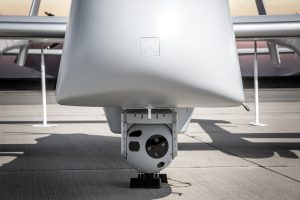
In 2019, Saudi Aramco oil facilities were attacked by drones, resulting in significant disruption to oil production and contributing to sharp volatility in global oil prices. The incident demonstrated how drone-related security threats can extend beyond individual facilities and potentially affect global energy markets and geopolitical developments.
Unauthorized drone activity in controlled airspace has also become an increasing concern. According to information cited from the U.S. Federal Aviation Administration (FAA) in the original material, more than 5,800 incidents involving drones operating in proximity to civil aircraft were reported in 2020, representing a significant increase over the preceding five years.
Drone-related disruptions at major airports have likewise demonstrated the potential operational and economic consequences of unauthorized UAV activity. Such incidents may result in flight disruptions or cancellations, passenger delays, and substantial economic losses.
Beyond aviation disruption, the misuse of drones may involve unauthorized surveillance and privacy violations, transportation of prohibited materials, interference with aircraft operations, and other activities that may threaten public safety.
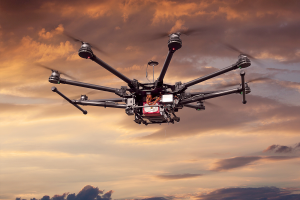
Critical industries such as petroleum and petrochemicals, electric power, and communications, which form an important part of national economic and social infrastructure, face additional challenges from unauthorized UAV activity.
Drones entering restricted industrial areas may potentially threaten critical infrastructure and sensitive production facilities, particularly if they are used to carry hazardous or flammable materials or conduct malicious activities against protected assets.
As UAV technologies and applications continue to expand, the potential consequences of unauthorized or malicious drone activity are becoming increasingly significant. Across industries, strengthening low-altitude security capabilities and establishing appropriate UAV detection, monitoring, early-warning, and protection systems are therefore becoming increasingly important for safeguarding critical infrastructure, maintaining public safety, and protecting lives and property.
Advancing Technology, Emerging Risks: Professional Counter-UAS Systems Strengthen Critical Protection
Unmanned aerial vehicles (UAVs) are characterized by low-altitude operation, compact size, light weight, and high maneuverability. Conventional air-defense systems are primarily designed to address high-altitude, high-speed targets and may therefore have limitations when detecting and responding to small, low-altitude, and relatively slow-moving UAVs. Across large and complex airspace environments, conventional detection systems may also face challenges in identifying, tracking, and accurately assessing unauthorized drone activity. As UAV technologies continue to advance, significant improvements in flight altitude, endurance, payload capacity, and overall performance are further increasing the complexity of low-altitude security. Against this backdrop, the limitations of conventional protection methods are becoming increasingly apparent, making the deployment of comprehensive, professional, and regulatory-compliant Counter-UAS solutions an important part of strengthening low-altitude security.

Professional Counter-UAS systems are specifically developed to address UAV-related threats and security requirements. Depending on the applicable regulatory framework and authorized operating environment, such systems may integrate technologies including RF interference, GPS/navigation spoofing, electromagnetic countermeasures, multi-sensor fusion, and AI-assisted analysis. Through coordinated detection, identification, monitoring, and authorized response capabilities, professional Counter-UAS solutions can help organizations identify potential UAV threats at an earlier stage, mitigate risks associated with unauthorized drone activity, and strengthen the protection of critical infrastructure and sensitive areas. As low-altitude security requirements continue to evolve, establishing a systematic and integrated Counter-UAS architecture is becoming increasingly important for protecting public safety, maintaining the security of critical infrastructure, and building a safer, more resilient, and sustainable low-altitude security ecosystem.
Regulatory Compliance and Approved Technologies: Building a Sustainable Counter-UAS Security Ecosystem
For Counter-UAS equipment, legal and regulatory compliance is a fundamental principle and an essential prerequisite for safe and responsible operation. Counter-UAS technologies may involve regulated areas such as radio spectrum management, public communication systems, aviation safety, and privacy protection. Their deployment and operation must therefore comply with applicable laws and regulations and, where required, be supported by relevant technical testing, licenses, permits, and regulatory approvals.
Compliant Counter-UAS equipment is subject to appropriate technical testing and designed to meet applicable standards and regulatory requirements, helping authorized users address unauthorized drone activity while minimizing unintended interference with legitimate UAV operations and other communication systems.
For this reason, when selecting Counter-UAS equipment and deploying a low-altitude security system, it is particularly important to verify the relevant licenses, type approvals, test reports, and other regulatory documentation.
Compliance not only provides an important foundation for safe and standardized operation, but also supports the long-term development of professional Counter-UAS technologies. Standardized and compliant solutions help create a more orderly industry environment and provide a sustainable foundation for long-term system deployment and operation.
Dynercomm provides professional, efficient, and regulatory-compliant Counter-UAS solutions for a wide range of industries, supported by applicable licenses, approvals, and technical documentation.
Designed with scalability and future expansion in mind, the DYNE RDN Series UAV Detection & Counter-UAS System has been deployed across applications including government facilities, defense-related environments, public security, correctional facilities, high-speed rail, airports, electric power, petroleum and petrochemicals, grain storage, and universities, and has also been supplied to multiple overseas markets.
The system has supported low-altitude security applications for major projects and events, including the Xi’an National Games and Tesla manufacturing facilities.

Within the RDN portfolio, the RDN-410 RF UAV Detection System and RDN-501 Navigation Spoofing System are designed for applications in petroleum, petrochemical, and other hazardous industrial environments with stringent explosion-protection requirements. Their design takes into account the specific operating conditions of high-risk environments where flammable or explosive atmospheres may be present and follows applicable explosion-protection requirements to support safe and reliable operation.
In complex and demanding industrial environments, the systems utilize RF technologies to detect and identify potential unauthorized UAV activity, helping users strengthen situational awareness around critical infrastructure and important production areas within petroleum and petrochemical facilities. Their capabilities are specifically designed around the security requirements of hazardous industrial applications, providing an additional layer of low-altitude protection for petroleum, petrochemical, chemical, and other industries operating in safety-critical environments.
Dynercomm’s Counter-UAS solutions have undergone relevant technical testing and certification procedures by applicable authorities and are designed with a strong emphasis on technical reliability, operational safety, scalability, and upgradeability. By combining professional Counter-UAS technologies with appropriate regulatory compliance and system-level integration, Dynercomm provides customers with a reliable foundation for long-term, sustainable low-altitude security operations.
RDN-410 RF UAV Detection System
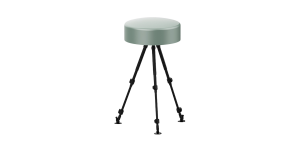
The RDN-410 RF UAV Detection System primarily utilizes radio-frequency sensing technology to detect and identify target UAVs and obtain relevant information such as drone model, communication frequency band, bearing, GPS coordinates, and operator location. The system continuously monitors UAV remote-control signals and frequency-hopping video transmission signals, providing 24/7, 360-degree surveillance within its designed detection range.
It can rapidly detect UAVs that are airborne or preparing to take off, provide accurate direction finding, and identify incoming UAV activity. The system also supports blacklist and whitelist management for more efficient threat identification and security management.
- The device provides broad detection frequency coverage with continuous, gap-free spectrum monitoring.
- The device offers long-range detection with high accuracy.
- Its user-friendly human-machine interface supports continuous 24-hour operation and unattended monitoring.
- Built on an IP-based architecture, multiple units can be networked and integrated with existing security systems, enabling centralized monitoring, management, and coordination under a command center.
- The system features a highly modular design for straightforward operation and maintenance, while providing strong reliability and serviceability.
- It can be deployed on fixed platforms in locations such as hilltops and rooftops, as well as on vehicle-mounted platforms, providing flexible installation options for different operational environments.
- The RDN-410 is also designed to meet the requirements of petroleum, petrochemical, and other hazardous environments where explosion-protection requirements apply, supporting reliable UAV detection and low-altitude security monitoring in demanding industrial applications.
RDN-501 Navigation Spoofing System (Active Counter-UAS System)
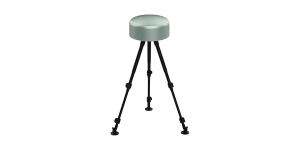
The RDN-501 Navigation Spoofing System (Active Counter-UAS System) consists of an antenna, a main unit, and system software. By transmitting simulated satellite navigation signals, the system is designed to influence the navigation of targeted UAVs, causing them to perceive abnormal navigation or velocity information. This enables authorized users to redirect approaching UAVs, keep them away from protected areas, prevent unauthorized entry into sensitive zones, and manage unauthorized drone activity.
- The system features a user-friendly human-machine interface and supports 24/7 continuous operation and unattended protection, with a configurable protection area.
- The system operates at low transmission power and is designed with personnel safety considerations in mind.
- Built on an IP-based architecture, multiple units can be networked and integrated with existing security systems for coordinated deployment and centralized management under a command center.
- The system features a highly modular architecture, enabling straightforward operation and maintenance while providing high reliability and serviceability.
- The system can be deployed on fixed platforms in locations such as hilltops and rooftops, as well as on vehicle-mounted platforms, providing flexible installation options for different application scenarios.
- The system is designed for applications in petroleum, petrochemical, and other hazardous environments where explosion-protection requirements apply.
- The system is supported by a relevant radio regulatory technical test report.
RDN-404 Portable RF Counter-UAS System
The RDN-404 Portable RF Counter-UAS System is a manually operated portable solution designed to generate RF interference across designated frequency bands. It disrupts applicable UAV radio-control and GPS/navigation links, enabling authorized personnel to direct unauthorized drones to return or land and helping protect critical directions, restricted areas, and key facilities from unauthorized UAV activity.
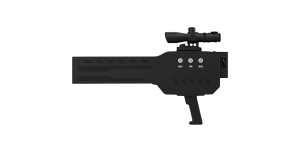
- The RDN-404 features an all-in-one design that integrates the electronic circuitry, antenna system, and battery into a compact unit, simplifying deployment and operation.
- The system utilizes broadband RF interference technology with segmented frequency-band coverage to address applicable UAV data links and satellite-navigation frequencies.
- The RDN-404 is ergonomically designed with careful consideration of its form factor, weight, and dimensions. Featuring low power consumption and low radiation output, the device is straightforward to operate and easy to carry, supporting flexible deployment across different authorized security scenarios.
We aim to provide our customers with…
Comprehensive Professional Communication & Security Solutions
- Comprehensive Project Requirements Assessment
- Practical and Feasible Project Recommendations
- Accurate Solution Quotation
"*" indicates required fields