DYNE SD58i Performance Review:Decoding the Core Performance Metrics That Matter When Selecting a Professional Two-Way Radio

Driven by continuous advances in digital communication technologies and increasingly specialized industry requirements, the professional digital two-way radio market has become more diversified than ever. Products from different brands may appear increasingly similar in terms of design and feature lists, while significant differences remain in pricing and underlying technical performance. This can easily lead users to make purchasing decisions based primarily on visible features.
However, the logic behind professional radio selection is shifting from simply comparing the number of available functions toward evaluating performance, reliability, and communication quality. Core technical parameters such as frequency stability, receiver sensitivity, and interference resistance directly affect communication coverage, voice transmission quality, and performance in complex environments. As a result, these parameters have become important benchmarks for evaluating the true value of a professional digital two-way radio.
The Fundamentals of Radio Selection: Identifying the Real Performance Anchors
When selecting a two-way radio, users are often drawn to visible specifications such as battery capacity, device thickness, and button layout. Yet one fundamental principle can easily be overlooked: the primary purpose of a professional two-way radio is to transmit critical voice information reliably when and where it is needed.
The technical parameters that determine this fundamental capability are often hidden beneath the surface.
Even an impressive battery capacity provides limited practical value if weaknesses in core communication performance result in communication interruptions at critical moments. Likewise, an attractive and sophisticated product design cannot compensate for an inability to transmit instructions clearly under weak-signal conditions.
These core technical indicators ultimately translate into performance that users can experience in real-world operation.
Frequency stability, for example, affects the accuracy and consistency of the transmitted carrier and contributes to reliable signal quality. Receiver sensitivity determines how effectively a radio can detect and recover weak signals, directly influencing practical coverage at the edge of a communication area. Interference resistance affects the continuity and stability of communications in complex electromagnetic environments.
For critical industries such as petroleum and petrochemicals, ports, and logistics, communication problems caused by insufficient core performance can have consequences far beyond the initial difference in equipment price. At a minimum, they may disrupt dispatch operations and slow production. In more critical situations, they may contribute to operational safety risks.
The hidden costs associated with these issues can significantly exceed the initial price difference between products.
For this reason, selecting a professional digital two-way radio requires looking beyond appearance and additional features and returning to the fundamentals of communication performance. Core technical parameters should serve as fundamental reference points in the purchasing decision.
At its core, professional digital radio communication is a closed-loop process consisting of transmission, signal propagation, and reception. A performance weakness at any stage can affect overall communication quality.
The transmitter determines the quality of the signal at its source, while the receiver determines how accurately that signal can be detected and recovered at the destination.
Evaluating key parameters at both ends of the communication chain therefore provides a more comprehensive picture of overall radio performance.
Separating testing into transmitter-side and receiver-side evaluations provides a structured approach to understanding the communication chain and identifying the technical strengths of a radio.
Transmitter parameters are closely related to signal output quality. Stable, clean RF output can help reduce transmission degradation and provide greater tolerance to interference, making transmitter performance an important foundation for reliable communications.
Receiver parameters, meanwhile, reflect the radio’s ability to detect and recover incoming signals. They influence practical communication range and resistance to interference, with performance differences becoming particularly important in weak-signal environments and areas with multiple sources of electromagnetic interference.
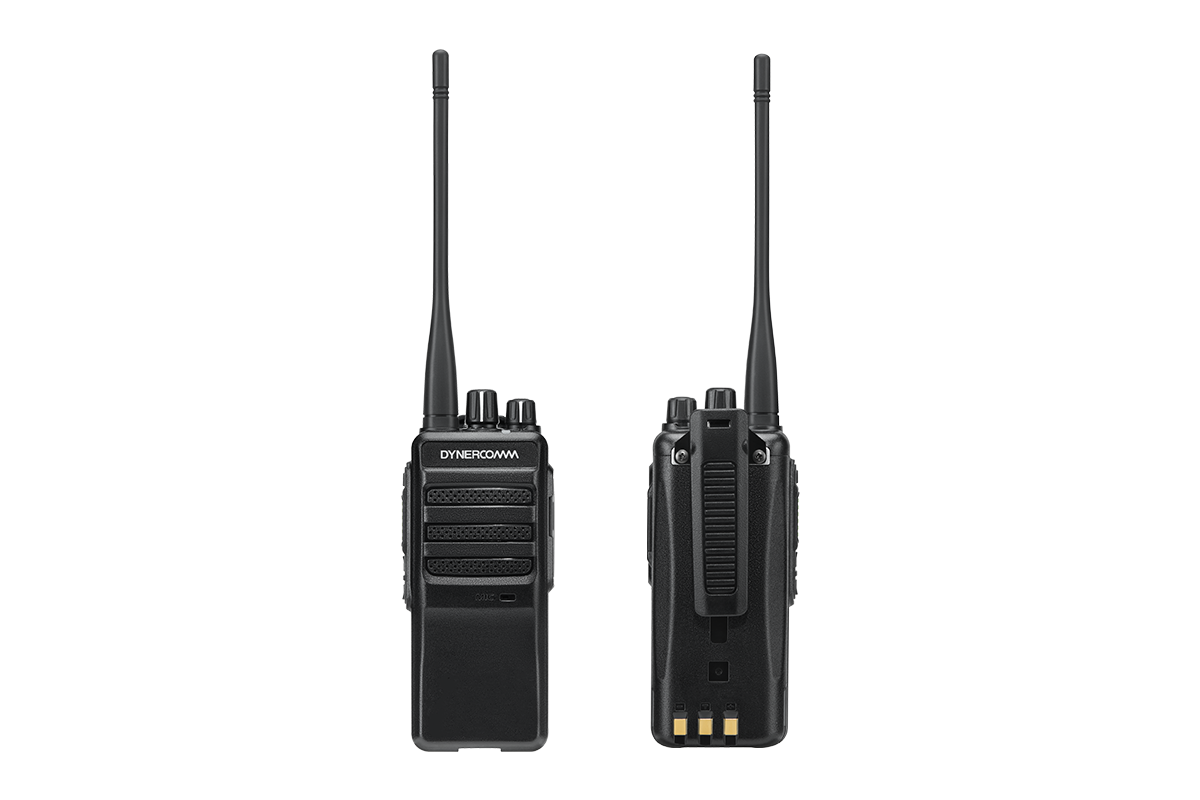
Following applicable professional standards, Dynercomm conducted laboratory testing of key transmitter and receiver parameters of the DYNE SD58i Digital Two-Way Radio.
By combining quantitative laboratory measurements with real-world distance and voice quality testing, Dynercomm systematically evaluated the SD58i’s core communication performance. Together with practical experience across multiple industries, these results provide professional users with technical reference points for radio selection and deployment.
Laboratory Performance Testing & Analysis
(Reference Standard: GB/T 32659-2016 — Technical Requirements and Test Methods for Professional Digital Two-Way Radio Equipment)
Transmitter-Side Testing: What Matters and Why
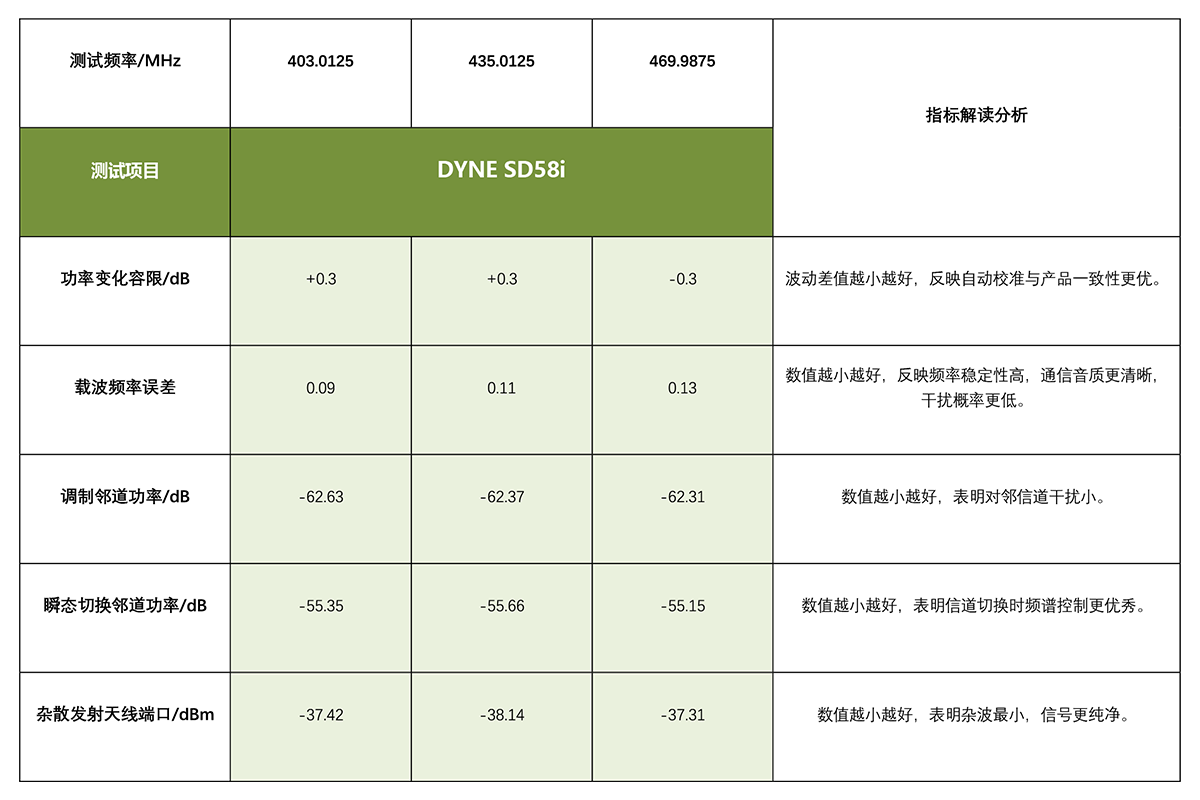
Five key transmitter parameters were selected for testing, focusing on fundamental requirements across professional applications, including consistent output power, accurate frequency control, and controlled interference.
Power variation tolerance helps evaluate consistency in RF output performance across devices. Carrier frequency error reflects the accuracy of signal transmission. Adjacent-channel power-related parameters are particularly relevant in environments where multiple channels operate simultaneously, while spurious emission performance is important for controlling unwanted RF energy in complex electromagnetic environments.
Testing was conducted at 403.0125 MHz, 435.0125 MHz, and 469.9875 MHz, representing the lower, middle, and upper portions of the commonly used UHF operating range. This approach helps evaluate whether the radio maintains stable performance across different operating frequencies.
Summary & Analysis of Key Transmitter Test Results
Receiver-Side Testing: What Matters and Why
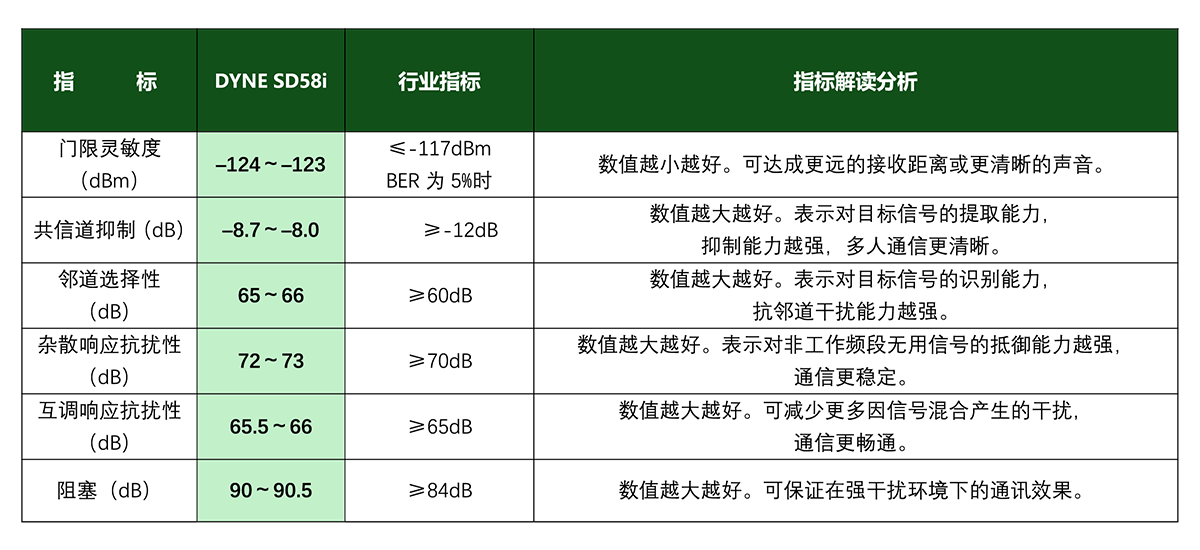
Six key receiver parameters were selected to evaluate three fundamental capabilities: signal reception, signal recovery, and interference resistance.
Threshold sensitivity reflects the receiver’s ability to detect weak signals and is particularly relevant at the edges of coverage areas, such as remote sections of industrial sites, warehouses, mountainous terrain, and other challenging locations.
Co-channel rejection and adjacent-channel selectivity help evaluate the radio’s ability to maintain communication quality when multiple users or communication groups are operating in the same area.
Spurious response rejection and intermodulation rejection reflect the receiver’s ability to resist unwanted signals and complex interference sources commonly encountered in industrial environments.
Blocking performance further evaluates the receiver’s ability to maintain reliable operation in the presence of strong interfering signals.
Together, these parameters provide a structured view of receiver performance under weak-signal and interference-intensive conditions.
Summary & Analysis of Key Receiver Test Results
For users who require high reliability and clear long-distance communications, prioritizing products with strong laboratory performance across core RF parameters is an important strategy for achieving dependable communication performance.
Test results show that the DYNE SD58i meets the applicable requirements of the referenced standard across the major transmitter and receiver parameters evaluated. It also demonstrates strong performance in key areas including frequency control, RF output power consistency, and spurious emission suppression.
These results reflect the design and manufacturing capabilities behind areas such as oscillator accuracy, RF circuit design, automatic calibration, and consistency across production units.
Under ordinary operating conditions, users may perceive relatively little difference between different radio models, as basic voice communication requirements can often be met by multiple products.
However, performance differences become more significant in long-distance communications, weak-signal coverage areas, and complex electromagnetic environments.
The SD58i’s measured threshold sensitivity and frequency stability indicate its ability to provide broader effective coverage, clearer communications, and greater reliability under these more demanding conditions.
Real-World Distance & Voice Quality Testing
To determine how laboratory performance translates into real-world operation, Dynercomm also conducted field distance testing of the DYNE SD58i.
The field results were consistent with the conclusions derived from the key laboratory measurements.
During multi-channel testing near the practical communication range limit, the SD58i demonstrated stable voice quality and communication performance. These results correspond with its laboratory performance in frequency accuracy, interference resistance, receiver sensitivity, and spurious emission suppression.
Even near the edge of practical communication coverage, the radio maintained clear and stable voice communications.
The combination of standardized laboratory testing and real-world field evaluation therefore provides two complementary forms of validation for the SD58i’s core communication performance.
Proven Across Diverse Industry Applications
The DYNE SD58i Digital Two-Way Radio has undergone years of practical market application. Through continued focus on core communication performance and deployment across complex operating environments, the product has established a stable reputation among industry users.
In hazardous petroleum and petrochemical environments, reliable RF performance helps maintain clear communications amid complex electromagnetic conditions. In busy port and logistics operations, stable long-distance transmission supports efficient dispatch and coordination. In precision-oriented biopharmaceutical environments, dependable signal performance helps maintain accurate operational collaboration.
From transportation environments requiring frequent dispatch communications to manufacturing facilities operating under demanding industrial standards, the SD58i has been applied across a broad range of professional scenarios.
Stable performance can also help reduce the hidden costs associated with communication interruptions, frequent maintenance, equipment failures, production delays, and dispatch errors in demanding operating environments.
Reduced maintenance requirements can further lower long-term operating costs, helping create practical value throughout the equipment lifecycle.
As communication technologies continue to evolve, products capable of delivering lasting value are those that remain focused on the fundamental purpose of professional communications and the real requirements of users.
Through a combination of quantitative laboratory measurements and real-world distance testing, the DYNE SD58i demonstrates an integrated product value built around technical reliability, scenario adaptability, and practical performance.
With compliance as a fundamental requirement and strong core technical parameters as its performance foundation, the SD58i balances technical capability with practical application value.
Rather than competing primarily through appearance or an increasingly long list of additional features, the DYNE SD58ifocuses its engineering capabilities on the technical parameters that directly influence communication performance—transforming measurable RF performance into benefits that users can experience in real-world operations.
For professional users, this is ultimately where the value of a two-way radio becomes clear: reliable transmission, dependable reception, and consistent communication when it matters most.
We aim to provide our customers with…
Comprehensive Professional Communication & Security Solutions
- Comprehensive Project Requirements Assessment
- Practical and Feasible Project Recommendations
- Accurate Solution Quotation
"*" indicates required fields